

If you've priced dental implants online, you've seen everything from "$1,499 implant specials" to quotes north of $6,000 — for what sounds like the same tooth. Here's the honest number for 2026: a single implant, start to finish, typically costs $3,800 to $5,500 in the US. The teaser prices aren't fake, but they usually cover one piece of a three-part procedure.
This guide breaks the price into its actual components, flags the add-ons that quietly raise the bill, explains what dental insurance really pays (less than you'd hope, more than zero), and walks through how financing and phased treatment turn a big number into a manageable one.
A "dental implant" is really three separate parts, plus the imaging needed to place them safely. Each has its own price line, and each may be billed at a different visit over three to six months.
Add those up and you land at roughly $3,800 on the low end and $5,500 on the high end for one complete tooth. This is also why that $1,499 ad isn't lying — it's quoting the post alone, and you'll still need the abutment and crown to have something to chew with.
The $3,800–$5,500 range assumes a healthy site: enough bone, no failing tooth to remove, a straightforward location. Real mouths are often less cooperative, and prep work is where quotes climb.
Location matters twice. Front teeth cost more because the cosmetic stakes are higher, and big-metro markets run 20–30% above the national range. A specialist (periodontist or oral surgeon) typically charges more than a general dentist, though for complex cases that premium buys real expertise.
Most 2026 dental plans have dropped the old blanket exclusion and now treat implants as a major service, covered at around 50%. The catch is the annual maximum — typically $1,500 to $2,500 — which caps your real benefit well below half of a $4,500 procedure. In practice, expect insurance to contribute $1,000 to $2,000, not 50% of the total.
Two ways to stretch that further: use HSA or FSA dollars, since implants are a qualified medical expense and pretax money effectively discounts the bill by your tax rate. And always ask your dentist's office to submit a pre-treatment estimate to your insurer, so you know the exact covered amount before anything starts — not after.
Almost nobody writes a single $4,500 check. Most practices offer third-party healthcare financing with 0% promotional periods of 6 to 24 months — at $4,500 over 18 months, that's about $250 a month. Many offices also run in-house membership plans that discount the procedure 10–15% for an annual fee, which can beat insurance if you don't have it.
Phasing is the underused move. An implant already takes months — extraction and graft heal for 3–4 months before the post goes in, and the post integrates for 2–3 more before the crown. Schedule the extraction and graft late in one insurance plan year and the implant and crown in the next, and you tap two annual maximums instead of one, often doubling what insurance kicks in.
Do shop around: quotes for the identical procedure can vary by $1,000 or more in the same city. Ask every office for an itemized quote covering post, abutment, crown, and imaging, so you're comparing complete prices rather than one line item against four.
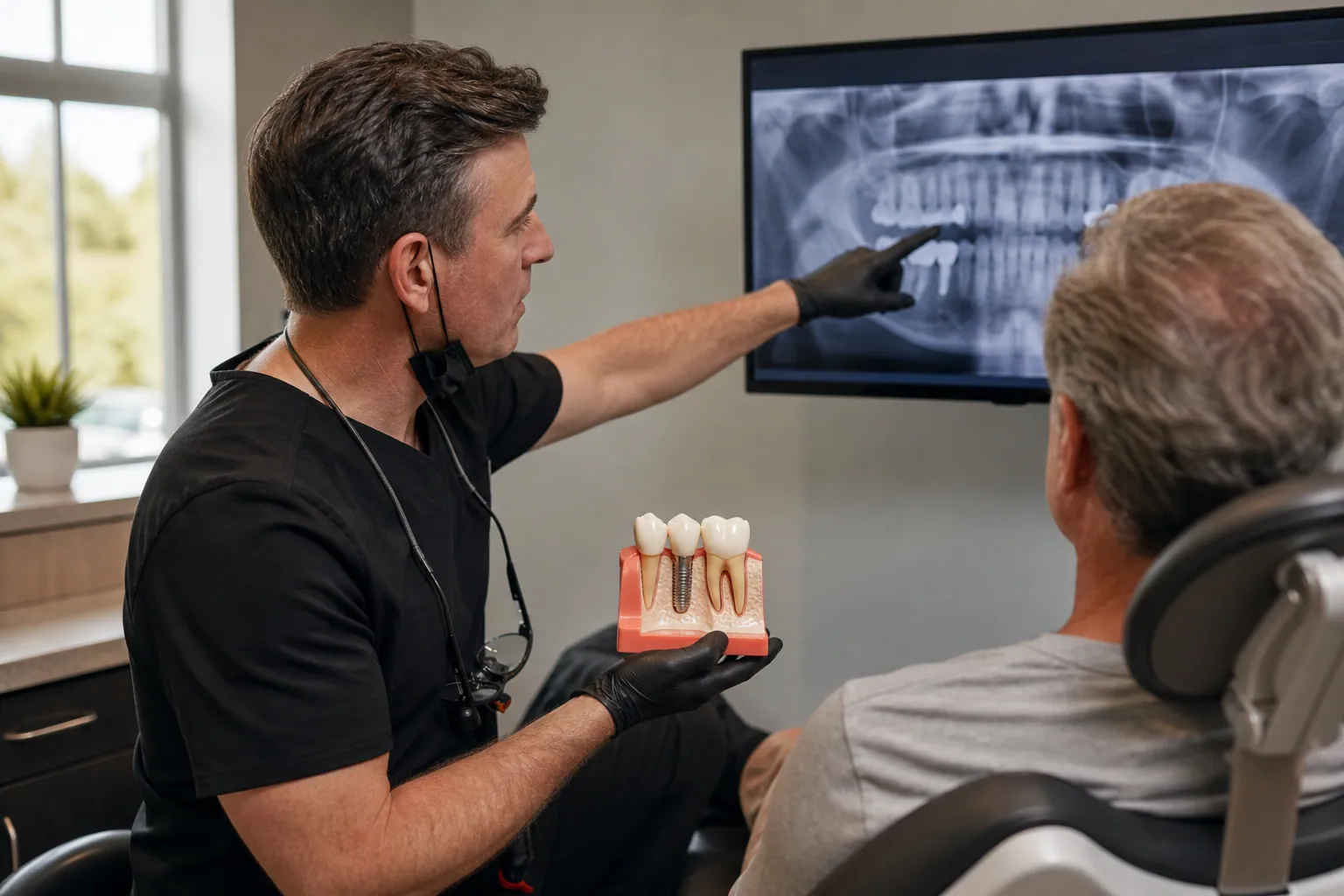
Don't bargain-hunt the surgery itself. Placing an implant means drilling near nerves and sinus cavities, and getting the angle wrong by a few degrees is the difference between a 20-year tooth and a redo. The planning scan, the placement, and any complications belong in the hands of a licensed dentist or surgeon — a practice like Acme Dental will map your bone on a CT scan and give you a fixed, itemized plan before committing you to anything.
One last piece of perspective: a well-placed implant routinely lasts 20+ years, while the cheaper bridge alternative usually needs replacing every 10–15 and sacrifices two healthy neighboring teeth. Amortized per year, the implant is frequently the cheaper option — it just asks for the money up front, which is exactly what financing and phasing are for.